
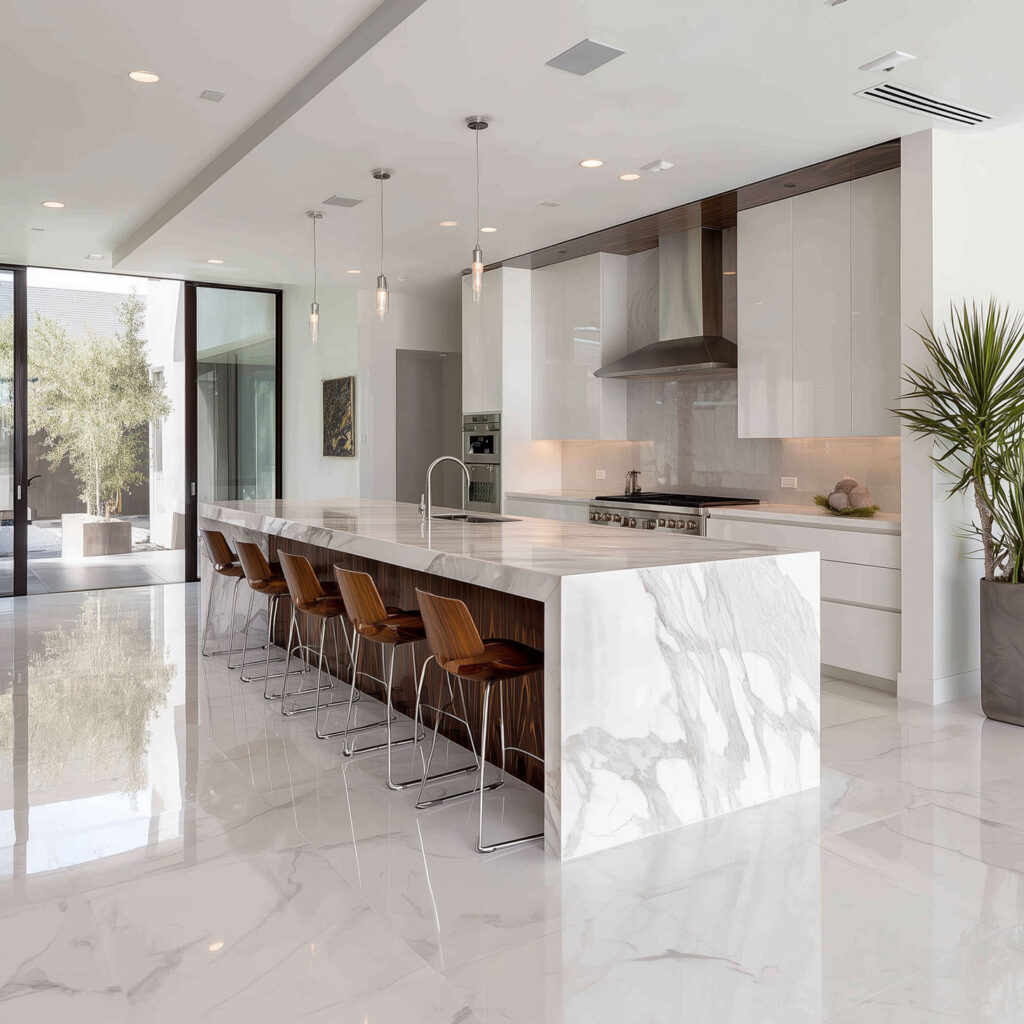
Kitchen renovations always start out dreamy. New cabinets. Better lighting. Maybe that “clean, modern” look you’ve been saving on your phone for months.
Then someone cooks. And the kitchen reminds you what it really is: a work zone.
If you’ve ever stood in a showroom, admired a glossy tile, and then quietly wondered, “Okay… but what happens when spaghetti sauce hits this?” you’re thinking like a responsible adult. Kitchens aren’t gentle. They get steam, grease, dropped plates, dragging chairs, wet boots at the door, and the kind of daily mess nobody posts on Instagram.
In Ontario, that pressure is even more obvious. Winter brings salt and slush. Spring brings mud. Summer brings backyard traffic. A kitchen floor and backsplash end up carrying more of your lifestyle than you expected.
And in 2026, it’s starting to look like white-body porcelain is taking over kitchens for a simple reason: it appears to hold up better when life gets real.
- Kitchens Expose Weak Materials Fast
A living room can hide problems. A kitchen can’t.
A cheaper surface might look fine for the first month. Then the first oil splash happens. Or the first heavy pot slips. Or the chair legs start doing their little daily dance across the floor. Suddenly you see scratches, stains, or dull patches that weren’t there before.
Porcelain tends to handle that kind of routine stress better. White-body porcelain in particular is usually made denser and fired hotter, which may suggest more hardness and better resistance to everyday wear.
That said, porcelain isn’t magic. If the subfloor is uneven or the installation is rushed, even the best tile can end up looking off. The material matters, but the workmanship still has the final say.
- Low Absorption Can Mean Fewer “Permanent Memories”
Most kitchen regrets aren’t about color. They’re about stains.
Think about the usual suspects:
- olive oil near the stove
- coffee drips by the machine
- turmeric, paprika, tomato sauce
- red wine during a dinner you were already stressed about
Some materials soak those in. And once a surface absorbs staining agents, you start scrubbing harder than you should, which sometimes creates a second problem: surface wear.
White-body porcelain is generally low-porosity. That doesn’t mean nothing can ever stain, but it does mean spills are less likely to become permanent, especially if you wipe them up within a reasonable time.
In real life, “reasonable time” might be 20 minutes because you got distracted. That’s exactly why low absorption matters.
- A More Modern Look Often Comes Down to Cleaner Lines
People say they want a “modern kitchen,” but what they often mean is: clean lines, less visual clutter, fewer interruptions.
Tile choice plays a bigger role here than most people expect.
Many white-body porcelain tiles come with rectified edges, which are cut more precisely. That often allows for tighter grout joints. The difference is subtle in a sample. On a full kitchen floor, it’s obvious.
Fewer and thinner grout lines can:
- make the floor feel calmer and more “architectural”
- reduce the grid-like look some kitchens get
- make cleaning a little easier, since grout is usually the first place that looks dirty
Still, there’s a trade-off. If your home is older and your floors aren’t perfectly flat, super-tight grout lines can be less forgiving. Sometimes a slightly wider joint is the smarter, more realistic decision. Not trendy, but practical.
- Kitchens Are Using Porcelain Beyond the Floor Now
This is one of the bigger shifts we’re seeing lately.
A lot of homeowners are using porcelain on:
- full-height backsplashes
- range walls (especially behind gas stoves)
- waterfall island sides
- coffee corners and pantry zones
- feature walls that used to be paint-only
Why? Because paint near a stove doesn’t stay perfect for long. And some “easy-clean” wall panels still scratch or discolor with heat and constant wiping.
Porcelain seems to be winning because it handles cleaning without drama. Wipe it. Done. No babying it.
Also, for people who like a cohesive look, using the same tone or texture across multiple kitchen surfaces can make the whole space feel more intentional. It’s one of those things guests notice, even if they don’t know why.
- Pricing Isn’t Only About Tile. It’s Often About the Supply Chain.
Let’s talk money for a second, because kitchens already eat budgets alive.
One reason tile can feel expensive isn’t always the tile itself. It’s the path it took to get to you.
In the traditional chain, tile often moves through multiple layers: factory, broker, distributor, wholesaler, retailer. Each layer might add value, sure, but each one also adds cost.
That doesn’t make the system “bad.” Warehousing, local inventory, customer support, returns, and delivery coordination are real services. The critique is simply this: when there are too many hands in the middle, the final price can drift far away from the actual product value.
Tilecy’s direct-import structure aims to shorten that chain. It may not make premium porcelain cheap, but it’s likely to make it more reasonable, especially on kitchens where square footage adds up quickly and every upgrade has a price tag attached.
What This Means for Your Kitchen Renovation
If you’re renovating a kitchen in Ontario and you want something that looks modern but lives like a workhorse, white-body porcelain is worth serious consideration.
It tends to offer:
- stronger performance under daily wear
- easier cleanup after real cooking
- a refined look with cleaner grout lines
- flexibility for floors, backsplashes, and feature walls
- less ongoing maintenance compared to many alternatives
And if you’re trying to balance quality and cost, where the tile comes from and how it gets to Canada can matter almost as much as the finish you choose.
Get In Touch
4789 Yonge Street
Hullmark Corporate Centre
Toronto, Ontario, Canada